
Article
Before S.T.A.L.K.E.R.: How Ukrainian Game Developers Reached the Global Market in the 1990s
From Luhansk to the global market: Meridian'93, Admiral Sea Battles, and the Ukrainian developers who helped shape game history.
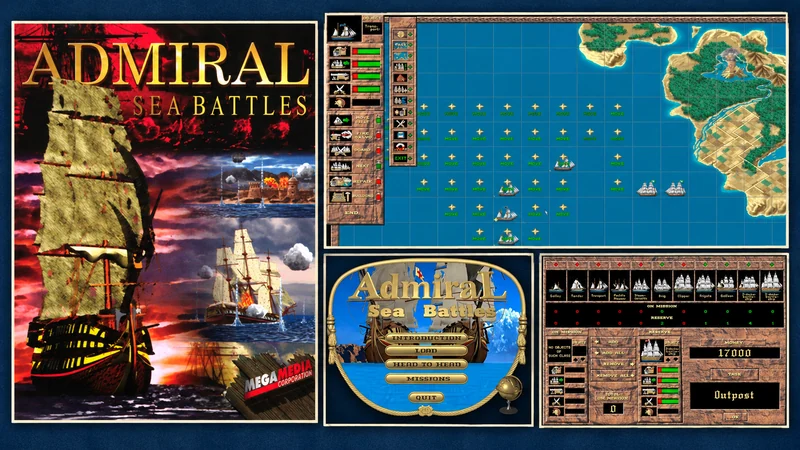
You've probably heard of S.T.A.L.K.E.R. 2, Metro Exodus, or Medieval II: Total War. But did you know that long before these games existed, a small Ukrainian studio was already making games for international players — and some of its developers would eventually go on to work on the Total War series?
Today, Ukrainian game developers work on major international projects, create their own worlds, and reach millions of players around the globe.
But where did it all begin?
Let's travel more than 30 years back, to 1993, to the Ukrainian city of Luhansk. This is where Meridian'93, one of Ukraine's first video game development studios, was founded.
And believe me, this wasn't exactly the easiest time or place to start a game development company.
Ukraine in the 1990s: Building Something Against the Odds
In 1991, Ukraine regained its independence after decades under Soviet rule. But the collapse of the USSR left the country facing an enormous economic crisis, with inflation reaching nearly 5,000% in 1993, businesses struggling to survive, and practically no domestic market for video games.
And the economic crisis wasn't the only challenge. Throughout the 1990s and 2000s, Moscow continued using its economic and cultural influence to keep Ukraine within Russia's sphere of control, dominating large parts of the media and entertainment markets and undermining Ukrainian national identity.
Yet despite these circumstances, Ukrainian companies continued to emerge, grow, and find success.
And Meridian'93 was one of them.
Meridian'93: A Small Ukrainian Team with Big Ambitions
The story of Meridian'93 began with a team of 12 researchers and graduates from the Luhansk Pedagogical Institute.
Before that, they had worked at a company called Novotronika, developing computer technology and educational software for schools.
But eventually, they decided to try something different — making video games.
With the support of local entrepreneur and investor Anatolii Smyrnov, Meridian'93 was founded in 1993.
Their first attempts weren't particularly successful. The studio's early project, Brainstorm, failed to attract much interest.
But instead of giving up, the team kept working.
Looking Beyond Ukraine
Fortunately, Meridian'93 had already set its sights on the Western market.
Rather than relying on a practically non-existent domestic gaming market, the team began looking for international partners and attending technology exhibitions in Europe.
And in early 1996, those efforts finally paid off.
At CeBIT'96 in Hanover, Germany, one of the world's largest technology exhibitions at the time, they met representatives of the American publisher Megamedia and demonstrated a prototype of their naval strategy game.
The meeting led to a publishing deal that would bring their first commercial game to an international audience.
And on 30 September 1996, Admiral Sea Battles was released — a game often described as the first commercial video game developed in independent Ukraine.
Admiral Sea Battles (1996): Naval Chess with Cannons
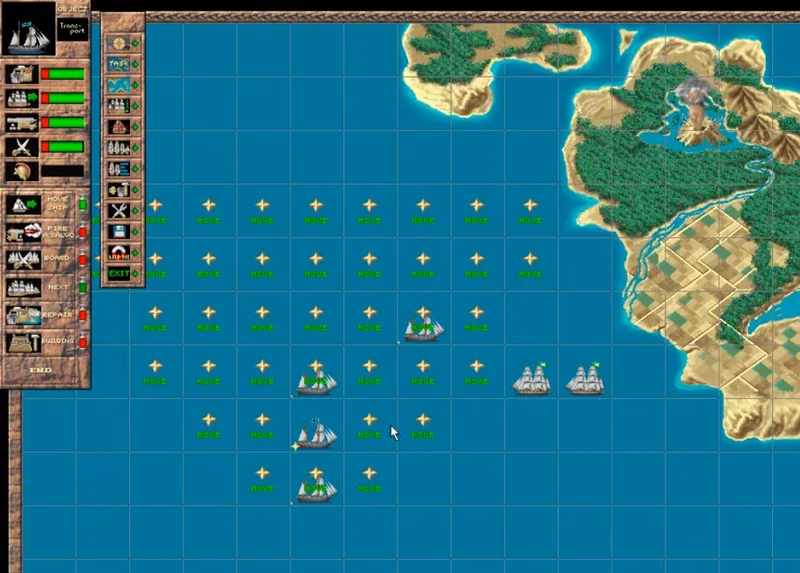
Admiral Sea Battles was a turn-based strategy game about naval warfare during the Age of Sail.
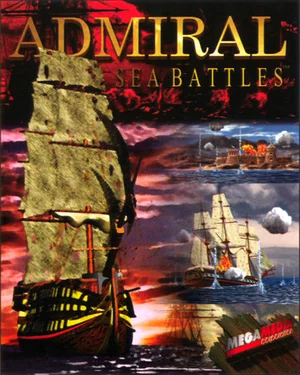
The team included Dmytro Prokopov, Andrii Doroshchuk, Viktor Sylak, and other developers from Meridian'93.
And this wasn't just a game where two little ships fired cannonballs at each other.
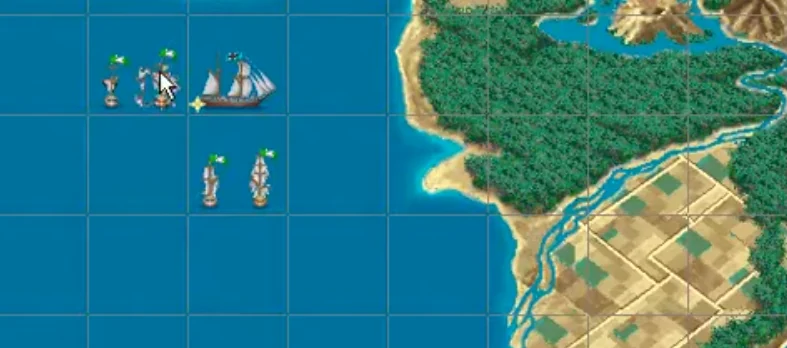
It featured 18 missions across three campaigns, 11 classes of ships, fleet repairs in ports, boarding actions, fortifications, and even multiplayer battles.
Players could command everything from small, fast vessels to massive battleships. Each ship had its strengths and weaknesses, so choosing the right fleet was an important part of preparing for a mission.
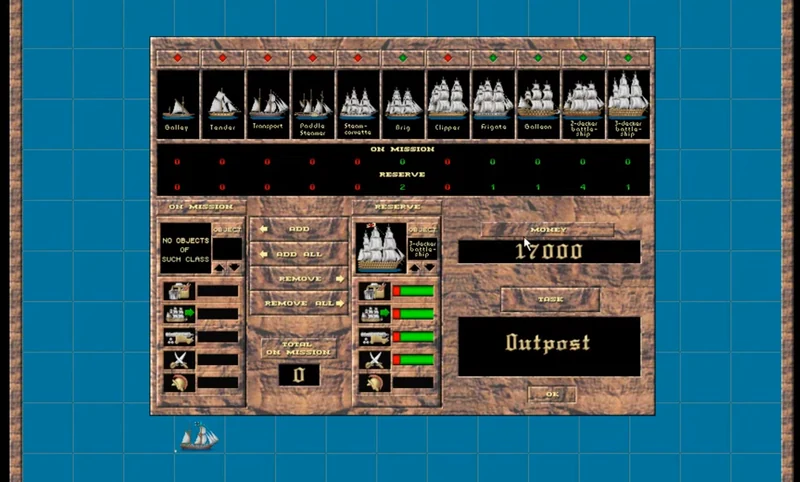
But what caught my attention most was the developers' approach to weather.
When the Weather Becomes Your Enemy
Imagine you've carefully positioned your fleet, prepared an attack, and you're just about to engage the enemy.
And then a storm hits.
Suddenly, your ships are blown off course, your carefully planned manoeuvre falls apart, and you have a completely different problem to deal with.
That's the kind of thing Admiral Sea Battles could throw at you.
Wind direction, sea currents, and storms affected ship movement. Severe weather could even cause vessels to sink.
And remember, this was 1996!
The game also allowed players to capture enemy ships through boarding actions, build coastal fortifications, and establish ports to repair their fleets.
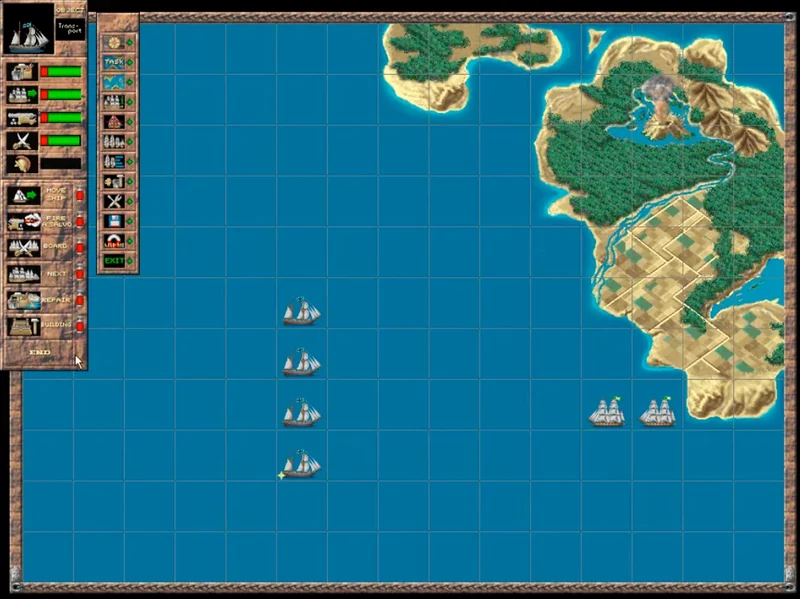
Of course, not everything worked perfectly.
Western reviewers criticised the game's slow pacing, frustrating difficulty, and sometimes limited tactical freedom. Some missions felt more like puzzles with one correct solution than open-ended strategic battles.
But despite its flaws, the game found an audience outside Ukraine, including Germany, Japan, South Korea, and Taiwan.
And just imagine this for a moment.
A small team from Luhansk, in a country that had only recently become independent and was going through an enormous economic crisis, managed to develop its own game and sell it internationally.
And that was only the beginning.
 The Rarest Gamer
Ancient Conquest (1999): The Next Stop Was Australia
Following the success of Admiral Sea Battles, the team started working on new projects.
In 1997, Megamedia offered the Ukrainian developers the opportunity to move to Australia and continue their work there.
It's a shame that this part of the team couldn't continue growing in Ukraine. But honestly, considering the times and circumstances, I can't blame them for making that decision.
Most of the original team relocated and formed Megamedia Australia, later known as Ellipse Studios.
One of their next games was Ancient Conquest: Quest for the Golden Fleece, released in 1999.
This time, the developers moved away from turn-based combat and decided to create a real-time strategy game (RTS), inspired by ancient Greek mythology and the adventures of Jason and the Argonauts.
And I have to say, they had plenty of ideas.
Fish, Amber, and Mythical Monsters
Instead of the usual gold and wood, players collected fish and amber.
These resources were used to develop settlements, construct ships, and expand your fleet.
And speaking of ships, the naval combat system was considerably more ambitious than simply selecting a unit and clicking on an enemy.
Different ships were suited to different tasks. Some were better at attacking enemy vessels, others at destroying fortifications or dealing with enemy crews.
Players could equip their ships with weapons, armour, and additional troops, including siege equipment such as ballistae.
You could ram enemy ships, attempt to board and capture them, establish patrol routes, and organise convoys.
And that was before the mythology kicked in.
Besides ordinary enemy fleets, players had to deal with sirens, harpies, cyclopes, minotaurs, sea monsters, and even dragons.
There were also legendary heroes with special abilities, temples, and magic.
All of this in a naval RTS released in 1999.
I really like how willing game developers were to experiment with mechanics back then.
Today, an RTS based on Greek mythology, with naval battles, unusual resources, ship customisation, and mythical creatures, sounds like quite a niche project.
But they had an idea, and they made it happen.
And whilst the game wasn't a major critical success, its unusual combination of mythology and naval strategy made it stand out from more conventional RTS games of the time.
By the way, the team was also working on Submarine Titans, another RTS, this time featuring underwater warfare, which was released in 2000.
Apparently, they really did love making strategy games about things floating in water.
The Next Chapter: Creative Assembly and Total War
And this is where the story gets even more interesting.
After their Australian projects, several former Meridian'93 developers, including programmer Andrii Doroshchuk and artist Viktor Sylak, continued their careers at Creative Assembly Australia.
These Ukrainian developers contributed to Medieval II: Total War and Stormrise.
You can even find their names in the official Medieval II: Total War credits.
Andrii Doroshchuk later continued his career as a Technical Director at Gameloft Australia.
But Meridian'93 itself didn't disappear when most of its original team moved abroad.
A new team formed in Luhansk and continued developing games, mostly casual titles, for many more years.
Some of their later projects included Alexander: The Heroes Hour (2004), Carcassonne: Hunters and Gatherers (2004), and several entries in the Magic Farm series.
Unfortunately, the story took a much darker turn in 2014, when Russia's war against Ukraine reached Luhansk and the city fell under Russian occupation.
The occupation disrupted the city's Ukrainian game development community. In 2026, Ukrainian game industry publication GameDev DOU also reported that Meridian'93 had been re-registered under Russian law in the occupied territory.
Not exactly the ending you would hope for when reading about one of Ukraine's early game development pioneers.
But the legacy of the developers who started there goes far beyond the company's name.
Why I Wanted to Share This Story
I feel that when people talk about video game history, most of the attention naturally goes to the United States, Japan, and Western Europe.
And that's understandable. Those regions built some of the biggest companies and markets that shaped the industry as we know it.
But the history of game development is much bigger than that.
While studios in the US were making Warcraft II and Diablo, and Japanese developers were preparing their next hits for Nintendo and PlayStation, small teams in Ukraine were also trying to find their place in the industry.
Without an established local gaming market.
Without a developed ecosystem of publishers, investors, or tools for game developers.
And in the middle of an economic crisis that's honestly difficult to imagine today.
What I particularly appreciate about Meridian'93 is their willingness to try something different.
They weren't afraid to experiment with gameplay, create unusual mechanics, or explore ideas that didn't always fit the established formulas of the time.
And I think this is especially relevant today, when fresh ideas are too often replaced by yet another remaster or a soulless, assembly-line release. Against that background, I have a lot of respect for developers who are willing to create something of their own, even if it isn't perfect.
They also managed to find international partners, bring their games to players around the world, and build careers in studios that would later work on some of the industry's best-known titles.
And remember, they were doing all this long before Steam, Unity Asset Store, YouTube tutorials, or any of the tools we take for granted today.
The history of Ukrainian game development isn't just about S.T.A.L.K.E.R., Metro, or modern AAA projects.
It's also about people who helped build that history long before Ukraine became a recognised part of the global gaming industry.
And I think stories like this deserve to be remembered — not just in Ukraine, but around the world.
POINTS.GS · Lumen Grove
Our Own Small Chapter
Like those early Ukrainian developers, we at POINTS.GS want to create our own worlds, experiment with ideas, and make games that offer more than just mechanics — games with their own stories and a bit of soul.
Our current project is Lumen Grove, a cosy mobile game about restoring a magical forest, meeting its inhabitants, and bringing light back to a world once covered in darkness.
If you'd like to explore that world and support Ukrainian indie game development, play Lumen Grove for free on Google Play.